

Neither Here Nor There: Identity as Mosaic
Fragments in motion — an essay on identity as mosaic.
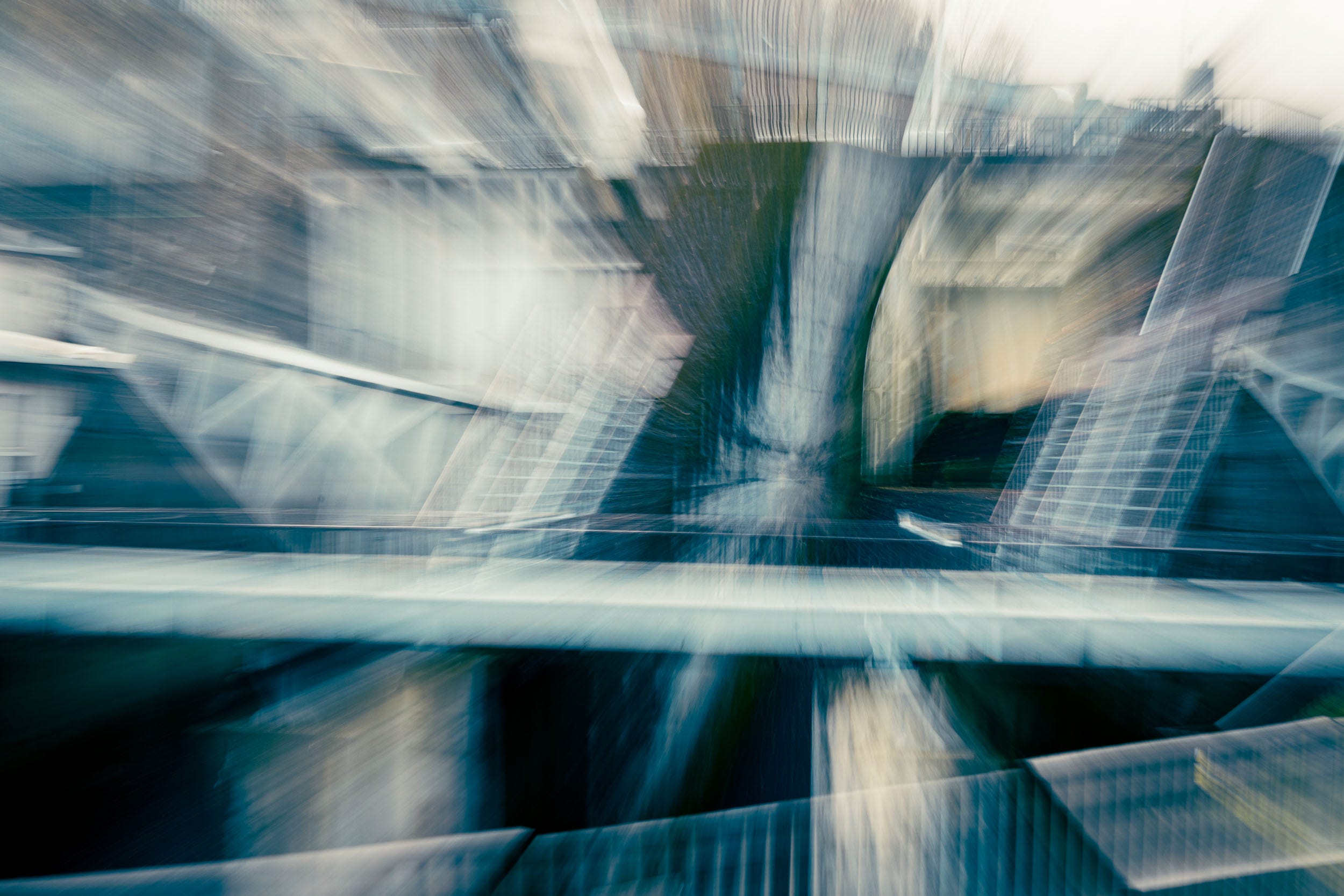
This is part 5 of my 7-part essay series, Neither Here Nor There: Loneliness, Belonging & Othering, that I’m sharing here on Substack. You can find the introduction and series hub here.
If loneliness taught me how to observe, and othering taught me how identity can be imposed, then fragmentation taught me how to create. My life has never been a single, coherent story tied to one place—it has always been made of fragments, and those fragments are what I now work with as an artist.
For TCKs who make art, identity isn't shaped by the continuity of one place, but by contrast—by constant movement, shifting norms, and the need to adapt. We learn early to observe, to adjust, to listen before speaking. Our identities are not neat stories; they are mosaics assembled from fragments of languages, rituals, places. And mosaics, when lit properly, can be more beautiful than any single, unbroken surface.
This fragmentation, which can feel like a deficit in social situations, becomes a strength in creative work. We learn empathy through necessity, flexibility through survival, curiosity through constant exposure to the new. As Camellia Yang wrote, "The invisible threads that connect us across cultures are stronger than any walls that divide us. It's in those threads that we find our true selves."⁷ For the artist, those threads become the material from which we weave our work.
But there is also a cost: the sense that we are visible but never fully known. Explaining ourselves becomes an exercise in oversimplification—and learning to live with being misunderstood becomes part of the creative process. When someone asks where I'm from, I've learned that the real answer is too complex for casual conversation. "Well, I was born in France, but we moved to Scotland, and then Malta, and then…" I watch their eyes glaze over. They want a clean answer. A place. A pin on a map.
Now, I plump for "Nowhere in particular," and then sit back to enjoy the often perplexed look that follows. My reasoning is that if there is a genuine interest there will be follow-up questions; most times there aren't. But this experience of perpetual explanation has taught me something essential about making art: sometimes the most honest answer is the one that creates productive confusion, that opens up space for deeper questions.
This mosaic identity shapes how I approach creative work. Instead of seeking to represent a single, authentic voice, I've learned to work with fragments, with the spaces between certainties, with the productive tension of never quite fitting anywhere completely. The camera becomes a way of capturing these in-between moments; writing becomes a way of assembling meaning from scattered experiences.
If your identity were a mosaic, what fragments would it be made of?
A mosaic is stronger and more beautiful when light hits its fragments just so. In the next part, I’ll ask: if identity is mosaic, what does that mean for the idea of home? Where is home for those of us who have lived between?
Next instalment: Where Is Home?
⁷ Camellia Yang is a Chinese-New Zealand writer, brand strategist, and Third Culture Kid whose work explores identity, cross-cultural belonging, and creative challenges of hybrid life.
Once again, this resonates, and I love the image!
This I love as well: "This fragmentation, which can feel like a deficit in social situations, becomes a strength in creative work."
My base structure, the foundation, would be my country where I’ve been born and its culture that has been passed on to me. But I see life as a ‘house’ that we keep on building and changing according to our experiences whether they come from the inside or the outside. One thing is true, if I wouldn’t have been exposed to something else than only Portugal I would be a completely different person. The mosaic would be only one, eventually, of the same colour stone. Instead, I’m happy that my mosaic is a colourful one. Richer and made of different shapes and structures!